
Cedar, pine, picket and board-on-board
Wood Fence Installation in Jersey City, NJ
A wood fence that fits a narrow backyard, with posts set deep and plumb and the finished side facing out.
- Free on-site estimates
- Written, itemized quotes by the linear foot
- NJ One Call (811) mark-out requested before any post hole is dug
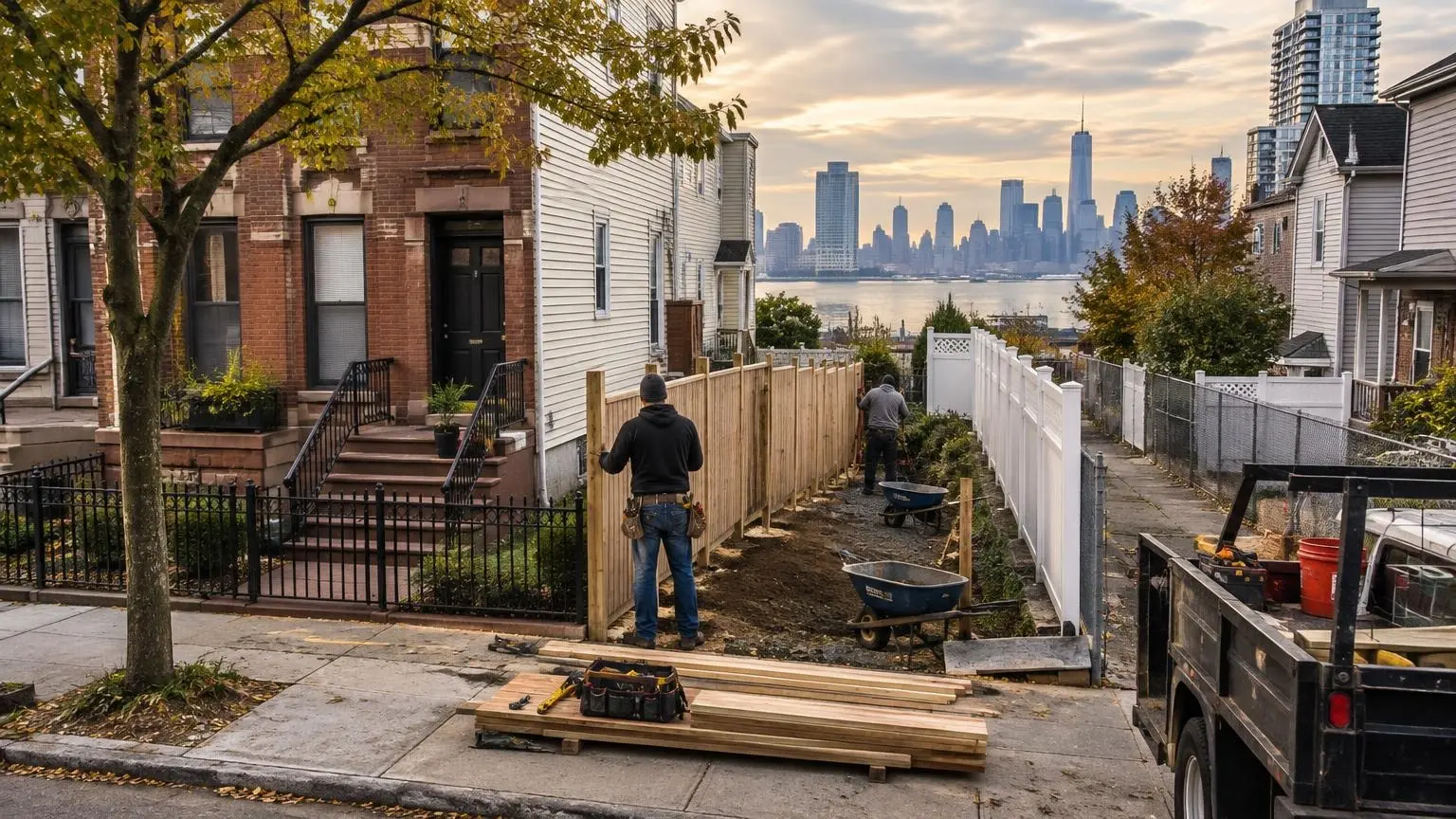
A Wood Fence for a City Backyard
Wood fence installation is still the most common way Jersey City homeowners close off a backyard. Wood is easy to cut to odd lengths, which matters on lots that are rarely square, and it can be built tall and solid for privacy or low and open for a garden. The choice comes down to species, style and how much upkeep you are willing to do.
Cedar or pressure-treated pine
Cedar has natural oils that resist rot and insects, stays straighter as it dries, and weathers to a soft gray if left unfinished. It costs more per board. Pressure-treated pine is chemically treated against rot and is the lowest-cost wood for a privacy fence. It is heavier, can twist or check as it dries, and looks best once it has been stained. For posts, we use pressure-treated lumber rated for ground contact regardless of the board species, since the post is the part that sits in wet soil.
Styles that work on Jersey City lots
- Board-on-board: overlapping vertical boards with no see-through gaps, even after the wood shrinks. A good fit for rear and side yards where you want full screening.
- Stockade and solid board: boards butted tight; full privacy at a lower cost, with small gaps appearing as the boards dry.
- Shadowbox: boards alternate on each side of the rails, so both neighbors see a finished face.
- Horizontal slat: a modern look that suits renovated rowhouses and roof decks.
- Picket: low and open, for gardens and side yards.
Where wood fences can go
Jersey City's zoning code treats the front of the lot differently from the sides and rear. In practice, wood privacy fences usually go along the side and rear lot lines, while the front of the house usually gets a low metal or picket fence instead. We confirm the rules for your lot with the zoning office and handle zoning approval before work starts.
Setting posts in tight spaces
Most wood fence failures start at the posts. We dig post holes deep enough for the height, set posts in concrete or compacted gravel depending on the soil and the spot, and crown the top of the concrete so water runs away from the wood. Backyards here often have old concrete, brick rubble, tree roots or a neighbor's garden wall right on the line, so we probe each spot before committing to a layout, and every hole waits for the 811 utility mark-out.
Finishing and upkeep
New pressure-treated wood usually needs time to dry before it will take a stain. Cedar can be sealed sooner or left to weather. Either way, a penetrating stain or sealer every few years slows graying and cracking. Keep soil, mulch and firewood off the bottom boards, and trim back vines, which hold moisture against the wood.
Good-neighbor details
We build with the finished side of the fence facing outward, with posts and rails on the inside of your lot, which is the usual courtesy and what several nearby towns' codes require. On a shared line, a shadowbox or board-on-board design gives both sides a clean face. It is also worth talking to your neighbor before the fence goes up, especially if an old fence on the line has to come out.
What This Covers
A wood fence job covers the layout, the posts, the fence itself and cleanup.
Privacy fences
Board-on-board, stockade and shadowbox fences for rear and side yards.
Picket and garden fences
Low, open wood fences for side yards and planting beds.
Wood gates
Walk gates built to match, with a frame that resists sagging and exterior-rated hinges and latches.
Old fence removal
Tear-out of the existing fence and old concrete footings, with haul-away.
Typical Wood Fence Costs
| Item | Published range |
|---|---|
| Wood fence, installed (Angi) | $10 to $45 per linear foot |
| Wood fence, installed (HomeGuide) | $20 to $50 per linear foot |
| Wood fence, installed (Fixr) | $15 to $35 per linear foot |
| Old fence removal (Angi) | $3 to $5 per linear foot |
| Gate (Angi) | $150 to $2,000 |
Published national ranges from Angi (2026), HomeGuide (2026) and Fixr (2025), installed. Prices in Hudson County can run higher than national averages, and height, length, access and removal change the total. Your written estimate is the price.
How It Works
1. Measure and plan
We measure the run, check the grade and old footings, and talk through style and height.
2. Approvals and mark-out
We confirm zoning rules, file for approval and request the 811 utility mark-out.
3. Set posts
Posts are dug, set and allowed to cure before rails and boards go on.
4. Build and clean up
Rails, boards and gates are installed, then debris and old fencing are hauled away.
Wood Fence Installation Questions
Is cedar or pressure-treated wood better for a fence?
Cedar resists rot naturally, stays straighter and weathers evenly, but costs more. Pressure-treated pine costs less and holds up well when stained, though it can twist as it dries. Many fences use pressure-treated posts with cedar boards to get the best of both.
How long does a wood fence last?
It depends on the wood, how well the posts drain and how often it is sealed. Posts set with good drainage and boards kept clear of soil and vines last much longer than a fence with wet, buried bottoms. Re-staining every few years helps.
Can I put a wood privacy fence in my front yard in Jersey City?
Usually not. Jersey City's zoning code treats front yards differently from side and rear yards, and a low picket or metal fence is the usual front-yard choice. Check the exact limit for your lot with the zoning office before planning anything tall out front.
Which side of the fence faces my neighbor?
Our standard is the finished side facing outward, with posts and rails on your side. A shadowbox or board-on-board style looks finished from both sides.
When can I stain a new wood fence?
Cedar can usually be sealed soon after installation. New pressure-treated pine often needs weeks or months to dry before it absorbs stain well; a few drops of water that soak in rather than bead up is a common sign it is ready.
Wood Fence Installation Service Areas
- Fence Contractors in Jersey City, NJ
- Fence Contractors in Hoboken, NJ
- Fence Contractors in Bayonne, NJ
- Fence Contractors in Union City, NJ
- Fence Contractors in West New York, NJ
- Fence Contractors in North Bergen, NJ
- Fence Contractors in Weehawken, NJ
- Fence Contractors in Secaucus, NJ
- Fence Contractors in Kearny, NJ
- Fence Contractors in Harrison, NJ
- Fence Contractors in Guttenberg, NJ
- Fence Contractors in East Newark, NJ
- Fence Contractors in Newark, NJ
- Fence Contractors in Belleville, NJ
- Fence Contractors in Lyndhurst, NJ
- Fence Contractors in Nutley, NJ
- Fence Contractors in Elizabeth, NJ
- Fence Contractors in Rutherford, NJ
Get a Wood Fence Installation Estimate
Free estimates for wood fence installation.